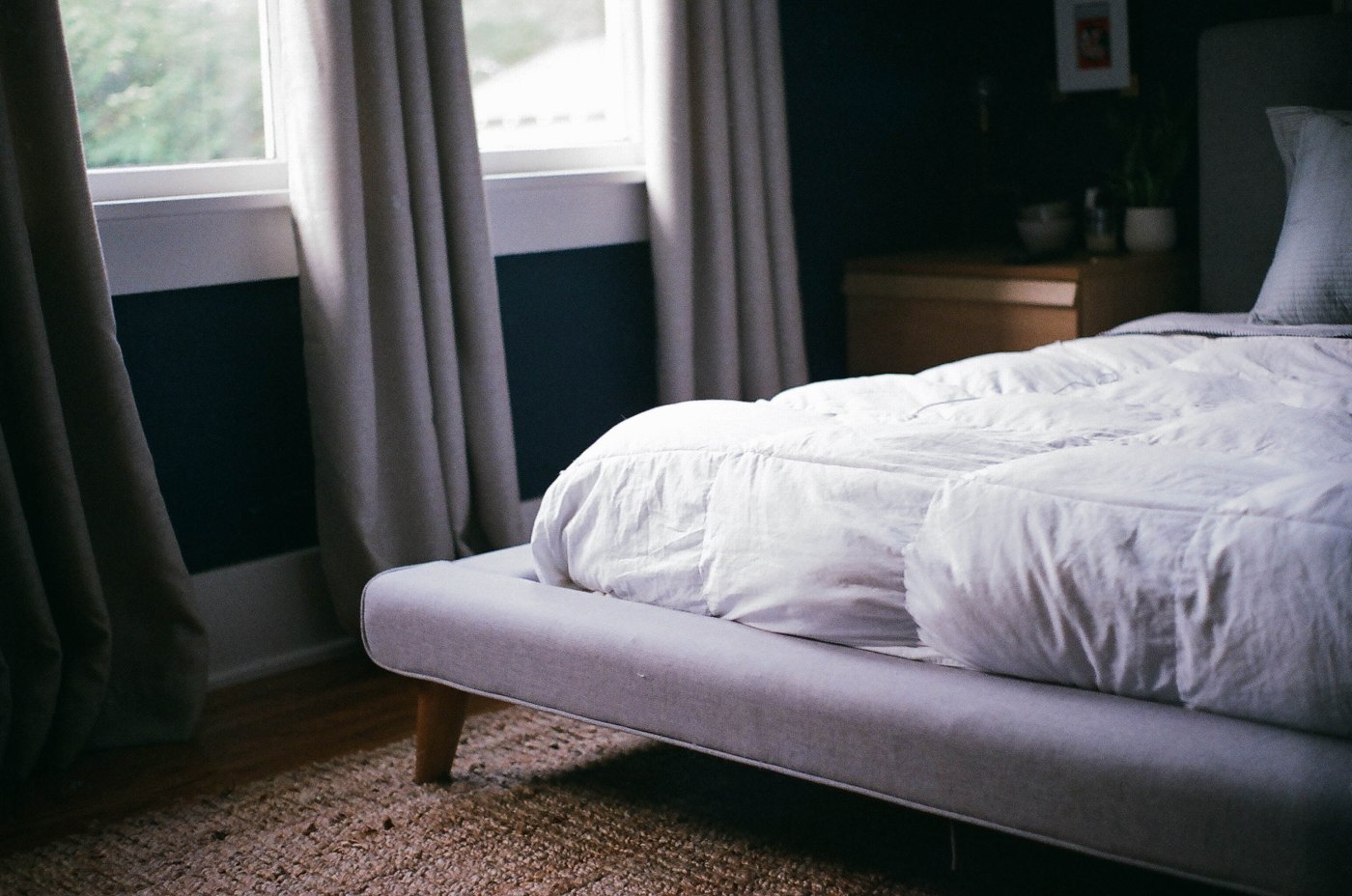
A good night’s sleep is the foundation of any healthy, happy lifestyle. One cannot be truly well without getting good sleep – and yet, how many of us really prioritise our sleep routine?
Our relationship with sleep can be tricky at best. There are so many people out there advocating late nights and early mornings in order to get ahead, and those of us who leave a night out early to get to bed are often ridiculed. Sleep is rarely valued as a health practice; we talk a lot about clean eating and exercise, but sleep is rarely mentioned. Good sleep can help us to keep stress at bay, to think more clearly, to handle unexpected problems more easily and even to keep our weight in check. In fact, disturbed sleep has also been linked to increased incidence of dementia.
So, what constitutes “good” sleep? Everyone has heard the stories of Margaret Thatcher sleeping for only four hours per night when she was Prime Minister, and many people have discussed the idea of “sleep hacking” as a valid alternative to getting a good night’s sleep. It’s true: there are some people who naturally only need a few hours’ sleep per night. That is a tiny, tiny percentage of the population though; for the vast majority of us, we need between six and eight hours of good quality sleep each night. That doesn’t mean we can sleep four hours per night through the week and then spend the weekend catching up; we need to be consistent with our sleep routine.
It also doesn’t mean we can feel good about our sleep routine if we just spend eight hours in bed each night. We need good quality sleep. Some of us might be fine with six hours’ good quality sleep; others might need eight. The point is that it needs to be good, restful sleep in order to be counted!

So here are Scentered’s top tips on getting a good night’s sleep:
Eat the right foods
It’s important to maintain a nutritious diet for good sleep. That can be hard when you’re constantly on the go, rushing between work and home – but you can make simple changes that will help. Try to avoid starchy carbs and overly processed foods as much as possible and include foods that contain tryptophan. Tryptophan is an essential amino acid that our bodies cannot produce; it’s present in protein, but we need carbs with it to help our bodies absorb it correctly.
Turkey is the most tryptophan-rich food, but it’s also available in seeds and nuts, soya, cheeses, beef and chicken (especially the dark meat), fish, beans, lentils, and eggs. Try to pair these with a good source of healthy carbs (for example sweet potato, vegetables or fruit) in your evening meal.

Caffeine curfew
If you’re struggling with sleep, caffeine is not your friend. Many of us feel that we depend on coffee to get us going in the morning, but caffeine has a half-life of five to six hours – so if you have a coffee at 5pm, your body has only eliminated half of that caffeine from your system by 10pm. It’s no wonder you still feel wired and awake when you’re trying to get to sleep! Most of us will be horrified by the idea of cutting out caffeine completely; if the thought of giving up your morning brew terrifies you and your mantra is “death before decaf,” consider putting a caffeine curfew in place. After midday, limit yourself only to water or non-caffeinated drinks. You should notice an improvement in your sleep quality almost immediately.

Get some exercise
The main reason people don’t exercise is that they don’t have time to go to the gym, get changed, do an hour on the treadmill, get a shower and get dressed again. But a lot of the reason we are not able to sleep at night is that while our brains are exhausted, our bodies have been sitting in a car/on a train/at a desk for twelve hours or more – they are not tired! The good news is that you can actually do a fairly effective workout in a short space of time; at home or if you do have time, then at the gym. HIIT sessions are a great way to increase your heart rate and get your body moving, they also require little to no equipment, making it the perfect at home session. You can do this any time of the day, in the morning before work, or when you arrive home in the evening. Yoga is also a great evening activity. Allowing you to get your body moving, whilst winding down and stretching before bed.
Supplement with magnesium
Magnesium seems to be the world’s best-kept secret when it comes to insomnia and sleep problems. It is actually a component of more than three hundred different enzymes in the human body and plays an important role in everything from hydration to energy production. Magnesium also plays a part in muscle relaxation, energy production and deactivation of adrenaline production. It’s crucial in the functioning of GABA receptors, which are present in the entire body and nervous system. GABA is a calming neurotransmitter, so if GABA receptors are not working properly, we will find it hard to calm down. Without correctly functioning GABA receptors, we remain alert and tense – even if we feel exhausted. Getting enough magnesium doesn’t automatically mean you’ll sleep like a baby, but if you are deficient in magnesium it almost guarantees you won’t sleep well. It is recommended to take a good quality supplement in a chelated form (either citrate, ascorbate, orotate or glycinate) before bed; around 400-600mg is ideal.
Aromatherapy
We all know that lavender is supposed to make us sleepy, but there are many other scents out there that will help you to feel more calm and serene, and therefore more likely to sleep off into a blissful sleep. Our Sleep Well Therapy Balm contains lavender, palmarosa and ylang ylang to help you relax and clear your head. Massage some into your temples and wrists as part of your evening routine. Or perhaps try our travel size Sleep candle – the perfect tool for helping you to unwind after a long day. Light before you go to bed and enjoy the natural fragrance allowing you to feel relaxed and calm whilst out of the comfort of your own home. Click here and use the code “maiden20” at checkout* for 20% off.

Darkness is your friend
A dark room can make a massive difference to the quality of your sleep. Blackout blinds are an obvious choice, but also look at what you have that lights up in your room: flashing alarm clocks; a mobile phone; a landing light left on for the children. All of these can have an adverse effect on the quality of your sleep. Get rid of as much light as possible from your bedroom, and definitely get rid of that TV; the blue light from the screen is the worst thing for anyone who’s trying to sleep. Also, consider getting a sleep mask to wear to bed. You might think it would feel restrictive to have your eyes completely covered, but it really can make a difference to good quality sleep for a longer period of time – especially in the summer, when the sun rises much earlier than most of us intend to wake up, or even whilst you’re travelling to block out what’s going on around you.

Avoid blue light
The light that comes from your TV, laptop, tablet or mobile is what we call “blue” light, and it actually stimulates the brain, waking us up. Working on your laptop or answering emails on your phone right up until lights-out might make you feel really productive, but it will also keep you awake and staring at the ceiling when you could be fast asleep. During the last hour before bed, switch off all screens and read a good book or magazine instead. If you must use a screen, invest in a pair of blue light blocking glasses, but don’t think that gives you free rein to carry on with the screen time. Taking the time to read a book and wind down helps the brain to relax and get out of “work” mode – only use the glasses when you’re up against a tight deadline and absolutely must use a screen.

Sleep is something many of us struggle with, and something very few of us get enough of. It can be hard to wind down after a hectic, stressful day but winding down and relaxing is the only way to ensure we can get to sleep and stay there. There are many ways to help yourself get a peaceful night’s sleep before reaching for the sleeping tablets; try a few of our suggestions and see how you fare.
Promotional code T&C’s: Enter code “maiden20” at checkout to receive 20% off. The code can only be used against full price purchases made on the http://www.scentered.me website and cannot be used in conjunction with any other offer. Valid until 31st March 2018.
Further Reading

Travelling away from home on a regular basis, whether for work or for pleasure, can be exciting and a challenge all at the same time. To minimise the stress, there are ways to make sure home and pets are well cared for in your absence, such as hiring housesitters to keep your home secure and your pets healthy and happy. Finding checked housesitters with pet experience can give you real peace of mind, so here are some top tips for the best way to find and choose your housesitters:
1. Find a trustworthy website – There are several things to look for to ensure you are in a safe place online
- Look for the green padlock in the browser bar for a website company that has a current online security certificate
- Testimonials – look for customer testimonials published on their own site
- Look for published testimonials in any of the review sites that verify real customers
2. Seek authenticated reviews for the company you have in mind – today there are many review websites that enable authenticated customers to publish their experience working with particular brands e.g. Trustpilot, Feefo, Which Magazine. Whether you search on Google, Bing or other browsers look beyond the paid adverts, it will yield a bigger selection of appropriate suppliers.

3. Biggest isn’t always best, look for a service that meets your needs and can help with your particular challenge. If you need a long-term pet or housesitter, you may want to find a company that has helped long-term travellers like yourself. If you have regular week long or two-week business trips you may want to find a business that can provide a personalised service.
4. Online versus personalised service – today most of us look online for a service, and yes, even with petsitters or housesitters. However, in the growing world of automated bot-controlled online services, it might be worth looking beyond attractive graphics for a company that has a personal contact option to support your particular needs.
5. Are the house and petsitters checked? – Letting any new or unknown person into your home is a worry. Yet in the Facebook world one can be easily persuaded that if a pet sitter has made contact via a social network they seem fine and harmless. Always ensure the sitters are verified or if they are new to the network you are joining, ensure they get verified.

6. Plan ahead – if you know your business trip or holiday is confirmed a few weeks or even months ahead, start making plans. And if you are part of a housesitting and petsitting network, publish your dates and housesitter requirements as soon as you can to get the best choice of sitters.
7. Documentation – Reputable organisations who deal in housesitting and petsitting will have template documents prepared for you to edit with your particular needs, detailing your travel and contact details, the main support contacts for your property and pets, and the local vets.
8. Prepare an easy to use guide for your home and pets – detail the routines required to maintain good order and healthy pets by describing what needs to happen to make your home function, and keep your pets healthy and happy.
9. To pay or not to pay? – There are many options today to find either paid or unpaid options for house and pet sitters. The traditional root is to find a sitter who stays in your home and gets paid by the hour. With a long business trip, this can be just as or more expensive than kennels. Today the internet has enabled new options through ‘the sharing economy’ creating networks of people who collaborate as part of a membership to help each other. For example, home and pet owners when looking for sitters are willing to give free accommodation to sitters happy to stay in the home looking after property and pets. The sitters are usually looking for ways to facilitate affordable travel.
10. Choose a company where petsitting is free as part of a collaboration – their good reputation will be the foundation for the business, and the sitters rely on their good reputation also for future assignments. It’s a win-win!

Lamia Walker is Director and Founder of HouseSit Match. She is an independent professional who conducts her business activities from home in High Wycombe. She is a professional company director and marketer with 25 years business and business travel experience. HouseSitMatch is an online membership network for home and pet owners to meet up with house and pet sitters in a safe collaborative space, with online and personal support should members need it. In 2016 HouseSitMatch was awarded the Guardian and Kia Motors Small Business Network competition of the year.
For further information please contact Lamia Walker at +44(0)7772142742
Further Reading

Africa is home to a variety of communities, such as the Nguni group, the Afrikaners, the Indians, the Mayans, and many others. This diversity also extends to the country’s landscape which promises untold travel-wonders. So, before starting your journey, here are nine things to consider.
Vaccinate
A few months prior to travel, see your doctor to organise any necessary vaccinations. Allow for sufficient time for any required follow-ups, which can be time-sensitive. Double check for any certificates you may need as evidence- for example, a yellow fever vaccination certificate is required to enter Sierra Leone. Africa is also a high-risk area for Malaria, so ensure you inquire about preventative medications.
Dress for The Weather
Africa straddles the equator but it isn’t scorching hot all over the continent. Mount Kenya and Mount Kilimanjaro are both tipped with glaciers, while nights can be severely cold in deserts with temperatures dropping as low as -10° C. It also snows in some places, so before packing light layers, look up the temperature and weather of each location on your itinerary.

Be Aware of Attire Etiquette
There are many Muslim countries in Africa whose cultural values are traditional and conservative. It is not unusual to receive unwanted attention from men, so it is advisable to cover areas such as your shoulders, décolletage, and legs above the knee. If you can, keep jewellery to a minimum.
Don’t Rely on ATMs
ATMs are not easily accessible in all parts of Africa, so it is recommended to take slightly more cash than you anticipate you’ll need. If you want to change currencies, then either do so at the airport or at another trustworthy currency-exchange service. Let your bank know where you’re travelling in case you need to use your debit or credit card while away.

Tipping is Expected
Tourists are expected to tip for anything from lunch to petrol station assistance. Car-watchers or car-guards are individuals in yellow or orange vests who watch and protect your car from break-ins after you have parked your car. The car-guard may actually insist that you owe them money if you don’t pay them, so keep change to hand and pay them instead of getting into an unnecessary quarrel.
Budget for Safari
Make sure you keep a generous budget if you want to go on safari. While most wallet-friendly camping options are a great bargain, if you’re looking for a comfortable bed and knowledgeable guides, you’ll have to keep your budget big. After all, everyone dreams of seeing lions, elephants, and wild buffaloes in their habitat, so it’s all worth it in the end.

Fussy Eater? Go prepared!
If you prefer not to eat adventurously, you might benefit from carrying familiar snacks with you. Like all foreign cuisines, African food can be of an acquired taste to some. Be prepared if you plan to visit rural areas as they have very limited supplies, especially in the summer.
Take proper safety precautions
The majority of crime incidents in Africa happen in areas that aren’t popular with tourists. That being said, it is not to say that tourists can’t be victims of petty crimes. If possible, wear minimal jewellery, and only use phones and tablets discreetly in vastly public areas. Avoid leaving your bags unattended, and if possible, do not walk around alone at night.
Use a Reputable Car Service
Cabs often don’t have meters and the drivers have been known to overcharge tourists, so research a trustworthy car service before your trip. See our guide to safe ground transportation here. If you’re renting a car, do not leave valuables inside and avoid going off the main roads when possible. You should also secure full insurance cover if you’re planning to rent a car.


Emmeline Brown is a passionate travel blogger. She shares an uncanny love for food and travel and has been dreaming of exploring the world ever since she took a trip to the Grand Canyon with her parents when she was 13. You can read more of her work in her freelance blogs, such as this Europe inspo article, and more on Travel & Chocolate Blog.