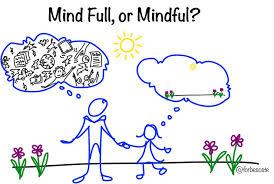
The reality of business travel
When you first contemplated the idea of travelling for work, you may have thought, “oh, that’s a glamorous perk”. In fact, if you were anything like me, you may have pictured yourself jet setting around the globe, seeing new places, having wonderful experiences, and dining in exotic venues. Initially, yes, or if you are one of the lucky ones, this may be the case. As the reality sets in however, for most of us, so does the disenchantment… it’s not quite the fairy tale we were led to believe by glossy tales.
In fact, one study conducted with the World Bank Group, stated that 75% of business travellers report high or very high stress levels as a direct impact, on lengthy trips or those with frequent changes1. A situation worsened for those with families, or those who travel frequently. Similarly, my own Ph.D. 2, which to date represents the biggest global study ever conducted on business travellers, demonstrated that people who travel for business, are more often than not experiencing negative social, emotional, physical and psychological consequences, at a more severe rate than non-business travellers. In fact, business travellers are 80 % more prone to burnout, which begins with exhaustion, then cynicism, then reduced efficacy, hugely affecting their well-being and effectiveness – both personally and professionally. As a result, you have very different and unique requirements in terms of support.
You may wonder how this manifests itself for you, so take a moment to reflect on these questions: Are you constantly exhausted, longing for your bed and chasing your glossy tale? Or perhaps struggling with feelings of missing out being away from your other half, your kids, home comforts or even that crucial social event with the girls? What about the physical aches and pains – is it easy running around carrying luggage and being cramped into small seats? Do you struggle to exercise and eat healthily, worrying about gaining weight? Do you find yourself wondering if you have made the right choice, are cut out for this life and have what it takes?
If you let this get on top of you, it can take years to recover from the build-up of negative experiences, thoughts and feelings. That’s the bad news. The good news is that with the right self-awareness, behaviours and mind-set, you can self-manage to make it work for you, whilst actually flourishing from life as a business traveller.
Mindfulness
If you have ears and eyes, there’s a good chance you’ve heard of the concept of mindfulness – the conscious state of being attentive to the present moment, observing thoughts and feelings, without judging them to be good or bad, but simply accepting as they are. Mindfulness is an ancient tradition that is all about living in the moment, awakening to every experience so life doesn’t slip by – enjoy the small things. Eckhart Tolle sums this up nicely: “In today’s rush, we all think too much — seek too much — want too much — and forget about the joy of just being.”
I became interested in mindfulness about 8 years ago, when I began working on a study looking at mindfulness and psychological flexibility in anxiety and depression3. Since then, I have integrated it into my work wherever possible – whether to help with stress, sleep, achieving goals, finding focus, figuring things out, or dealing with challenges of life – bringing calmness, security and inner strength that, frankly, feels incredible.
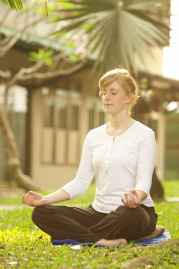
Mindfulness is a bit of a hot topic at the moment – quite rightly. People are recognizing the benefits across all areas of life and business travel is no different. Evidence is mounting demonstrating an increased sense of wellness and better work-life balance, something that most all women struggle with4. I’ve frequently celebrated with my clients who’ve seen the benefits of mindfulness first-hand. In fact, such celebrations can be seen on the BBC, where I recently worked with an athlete for the inaugural Salomon Glencoe Skyline, an extreme sport event, using mindfulness based approaches to improve enjoyment and performance of an immense event previously described as ‘the death race’. Despite challenges on race day (including nasty falls), their new mindfulness based awareness, tools and techniques resulted in a continuous smile and performance better than expected5. That’s a good reason to celebrate!
It’s no different for you. Business travellers I’ve worked with generally experience increased feelings of happiness and calm after practising mindfulness techniques. Many report feeling optimistic and better equipped to handle challenges and make decisions. Essentially, awareness and mindfulness helped people feel in a better place – socially, emotionally, physically and psychologically.
Mindfulness for Business Travel
So often when we travel, we are focused on preparing for the trip, getting through the journey, arriving at the destination, doing what needs to be done and getting home. Constantly planning, you are missing so much by simply not paying attention! Below are some top tips that will help improve the experience of business travel:
- Use the busy security line as an opportunity to practice deep breathing under chaotic (or stressful) situations. This will help retain a sense of calmness, get oxygen to the brain and clear your head. Start by bringing your attention the very act of breathing. Notice the sensation of the air moving through your nose, filling your lungs and the rise and fall of your chest. Repeat this 5 times, breathing slowly in and out, continuing whilst going through the motions of movement in the security line. If you notice your attention wandering, simply return to focusing on the breath.
- Cognitive flexibility (your ability to adapt to unexpected or changing circumstances) is critical for well-being in business travel. We are adaptable creatures, so if you experience a delay, or unexpected change, take a second to enjoy this opportunity to practice your flexibility for when it really matters. Challenge brings development. Enjoy it. Smile at fellow passengers. Remember,everyone has a different reason for their journey, their own story and preoccupations. Simply acknowledge your thoughts and emotions, remember that you have control over them, then practice letting go of frustrations or negativity. It’s ok to have these, but refocus the mind on something constructive.
- Recovery is paramount in business travel and one key aspect of this is relaxation. When you get to your destination, explore and practice mindful walking. Pay attention to what you are seeing, feeling underfoot, how your muscles and body are stretching out after the journey and the good sensations that brings. If you can, find some grass and walk barefoot, focusing on how it feels underfoot, the smells and sounds. Feel as many sensations as possible.
What can you do?
The most successful people are happy; energised, engaged and effective. They work on themselves, improve self-awareness, have self-management strategies, balance to their lives, and a personal wellness plan that boosts them through the four stages of travel. I coach professionals who travel for work to feel healthy, happy and energised and am offering a free consultation.

Dr Lucy Rattrie is a Chartered Psychologist and Wellness Coach, with a Ph.D. on engagement, burnout and wellbeing of global mobility and business travellers. She believes in the power of psychological strength in enabling people to achieve success in all areas of their lives and work. As a researcher and practitioner of positive psychology, who has blended her work with lifestyle medicine, she recognises the crucial impact employee wellness has on performance. As a specialist in improving wellness for professionals who travel, she provides 1-1 and group coaching with two programmes: Recovery and Thrive, both helping people live stress-free, calm, balanced, connected, with strong mental, emotional, physical health and energy. She can be contacted directly on lucy@creatingsona.com or via www.creatingsona.com.
Footnotes
1Espino, C., Sundstrom, S., Frick, H., Jacobs, M, Peters, M. (2002). International business travel: impact on families and travellers. Occupational and Environmental Medicine, 59, 309-322.
2Rattrie, L. T. B. (2013) . The role of demands and resources in the international work context: conceptual approach and empirical analysis. Doctor of Philosophy. The University of Stirling, Department of Management, Work & Organisation. Horizon Scholarship (Geneva based).
3White, R., Gumley, A., McTaggart, J., Rattrie, L., McConville, D., Cleare, S., Mitchell, G. (2013). Depression and Anxiety Following Psychosis: Associations with Mindfulness and Psychological Flexibility. Behavioural and Cognitive Psychotherapy, 41(1), 34-51.
4Michel, A., Bosch, C., & Rexroth, M. (2014). Mindfulness as a cognitive -emotional segmentation strategy: An intervention promoting work -life balance. Journal of Occupational & Organizational Psychology, 87(4), 733-754. doi:10.1111/joop.12072
5The Adventure Show, BBC 2 (2016). Episode 8.
Further Reading
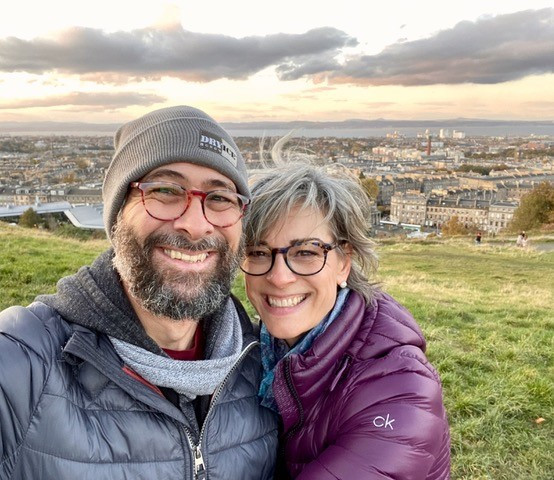
There are many benefits to having a spouse tag along on business travel and with more professionals able to work remotely, it’s become easier to do. Not only is it a nice perk for your spouse, it’s something that employers should encourage in the interests of the health and wellbeing of their workers.
Frequent Business Travel is Hard
There’s no question that travelling a lot for business takes its toll. It’s stressful even if you’re an old hand at it. Constantly contending with airport security, crowded flights, and changing time zones quickly dispels any glamorous jet setting fantasies. Add to that the difficulties of eating nutritiously in restaurants and getting regular exercise, and it’s easy to see why road warriors are generally less healthy than their home bound counterparts.
If you and your spouse are constantly apart, business travel delivers a psychological hit too. Separation a few times a year for a week or two is manageable, but if you’re finding yourself in an airport departure lounge a couple times a month that’s another story.
Having your spouse tag along at least some of the time can go a long way to easing the relationship strain and can be an added help managing the other challenges that come with business travel too. As the tag-along spouse, I have a long list of benefits on my side of the equation as well.
Almost like home
When I tag along on my husband Steve’s business travel, it’s usually worthwhile to rent an apartment. This allows me to set up my own comfortable remote work station and it comes with a kitchen. We usually choose a property in a residential neighbourhood. Instantly, we’ve replicated some of the comforts of home. Steve isn’t ending his long days with clients by coming back to a cramped hotel room with a bag of take out food. I can pop out to a grocery store during the day and we can cook a simple meal together, which is always vastly healthier. Because we’re in a neighbourhood, it’s easier to get out and take a walk in the evening, or get up a bit earlier and go for a run. Activity is also always easier with a companion.
It’s less lonely
Skype calls and instant messaging go a long way to keeping spouses separated by business travel in touch, but it doesn’t replace actually being together. Even if Steve is working long hours, if I tag along there is always time at the end of the day to talk and we’re at least sleeping in the same bed. This helps to maintain the relationship and eases the psychological strain of being separated from home and loved ones
When time allows, you can sightsee together or go out to a nice restaurant in the evenings. Although business travel isn’t like being on vacation, it’s a change of scene and can still be fun. We don’t have children, but if you do and can swing a tag-along trip without them, it’s a great opportunity to connect as a couple without the demands of childcare.
It can jumpstart a holiday and cut costs
A huge perk of taking your spouse along on business travel is that you only have to pay for one flight to get there. If you’re a frequent business flyer, you can usually use points to further reduce the cost. It’s a perfect opportunity to tack on some vacation time either in the location you’re visiting or somewhere else close by. Even if you’re not travelling to a destination you’d necessarily choose to visit on your own, don’t rule it out as a short vacation spot. There are several low-expectation places I’ve tagged along to that turned out to be absolute gems.
Employers benefit too
I can’t imagine why an employer would not encourage their employees to take their spouses with them on business travel. At the very least, they shouldn’t discourage it. Yet I sometimes get asked about overcoming an employer’s objection to spouse tag-alongs. Is it a concern about the employee not working full hours because the spouse is with them or that they are claiming expenses for the spouse’s travel? Those are the only two reasons I can think of and neither is a reasonable concern as far as I can see.
Every business that includes employee travel should have a travel expense policy. If you have an established per diem for meals and require receipts, that aspect is taken care of. As far as employee time spent on work, you either trust your employees or you don’t. As long as productivity and business goals are met, what does it matter how many hours your employee is putting in?
In my experience, Steve tends to work longer hours when on business travel then at home and I bet that’s a common experience. We’re careful about keeping my food expenses separate from his. As for lodging, the cost of two people staying in a hotel or apartment is generally the same as for one.
So, am I missing something? What’s the downside?
I think that savvy employers know that there is a burden associated with staff having to travel frequently. Recruiting and retaining exceptional people is not easy and retaining their loyalty is just as difficult. Add the work requirement of frequent travel and you’ve really got your work cut out for you finding great workers. Making it easy for them to have their spouse tag along and going as far as having policies that encourage it could provide a slight edge.

Deborah Zanke writes the blog Tag Along Travel where she offers advice, tips, and travel reviews based on the experience of more than a decade of her husband Steve’s frequent business travel.
Further Reading

Colombia is a country very much overlooked by female travellers but the majority of the country is surprisingly safe for women.
Medellin, Colombia’s second largest city is fast becoming known as the “Silicon Valley” of Latin America due to its entrepreneurship, start-up companies and work ethic. Being part of Latin America, it is still a very machismo society but you’ll find women dressed up in Medellin, wearing skinny jeans and tight clothing so there’s no need to worry about attracting the wrong type of attention or feeling that you will stick out for dressing for your curves. The city has come a long way in the last decade and is now a safe place to visit and do business.
Colombians are very polite and tend to stand close to one another, so don’t worry if they sit or stand too close. It’s just part of their culture. They are also very expressive and wave their arms and hands around. Colombian women are known for expressing their emotions whenever they arise so you’ll always know where you stand even in a meeting.
Communication
Although Spanish is the main language here, many Colombians can also speak English. However addressing them in Spanish is polite, as well as by their title or by Señor or Señora until they tell you to call them by their first name. Most women greet each other with a kiss on the cheek but if you are doing business with men greet with a handshake unless they greet you with a kiss first.

Colombians can be similar to us Brits by not being so direct in their communication to avoid offending the other person. However, when it comes to negotiating they expect honesty when talking about prices and figures. Make sure that you speak to the correct person or you could find yourself going round in circles if you don’t liaise with the decision maker.
Although Colombians don’t expect others to be late during business, they are not known for being punctual, especially the women who can take hours to get ready. Being over 30 minutes late is acceptable for them and they may not issue an apology so it is advisable to call them before you leave to meet instead of waiting around.
Colombians love to talk so expect them to ask you about you and find out more before delving into business. Don’t expect meetings to finish on time and a decision to be made in just one meeting either as you may need to meet several times to get the ball rolling. Make sure that you end each meeting by asking what they are doing this coming weekend or asking about their family. Colombians are proud people and like people who take an interest in their country and them as a person.
Culture
Colombians are really proud of their country and especially if they are a ‘paisa’ and come from the Antioquia region of which Medellin is the capital. Although the country is still very machismo, the men have old-fashioned values and don’t look down on women, instead preferring to look after them and open doors and buy drinks to ensure they are comfortable and looked after. Women here either look after a family or are well-educated with a degree and in good paying jobs.

Dress
The key to business in Medellin is to dress to impress, and embrace your femininity. Jeans and casual wear is a no go. Ladies tend to stay away from trousers and wear skirts or dresses but avoid short skirts and opt for a pencil skirt instead. Women in Medellin dress immaculately with straight styled hair, perfect make-up and plenty of jewellery with manicured nails and high heels.
Outside of business, expect to be asked to dance by a Colombian man if you are out socially, and most of the time it is only a dance that is requested. If you do get approached and don’t want to dance, just say no. Colombian men are known for having a wife, a girlfriend and a lover and can be very charming. Infidelity is common here and even the women do it although it is as much as the men. You won’t see any Colombian women acting drunk on nights out either as it isn’t acceptable to be intoxicated.
Colombians are very easy-going people and it is easy for acquaintances to become firm friends here.

Lisa is a travel journalist specialising in solo travel. Her background in the travel industry fuelled her passion to see the world and for the last seventeen years, she has travelled extensively as a solo traveller, living and working in numerous countries. Follow her on Twitter at @girlaboutglobe