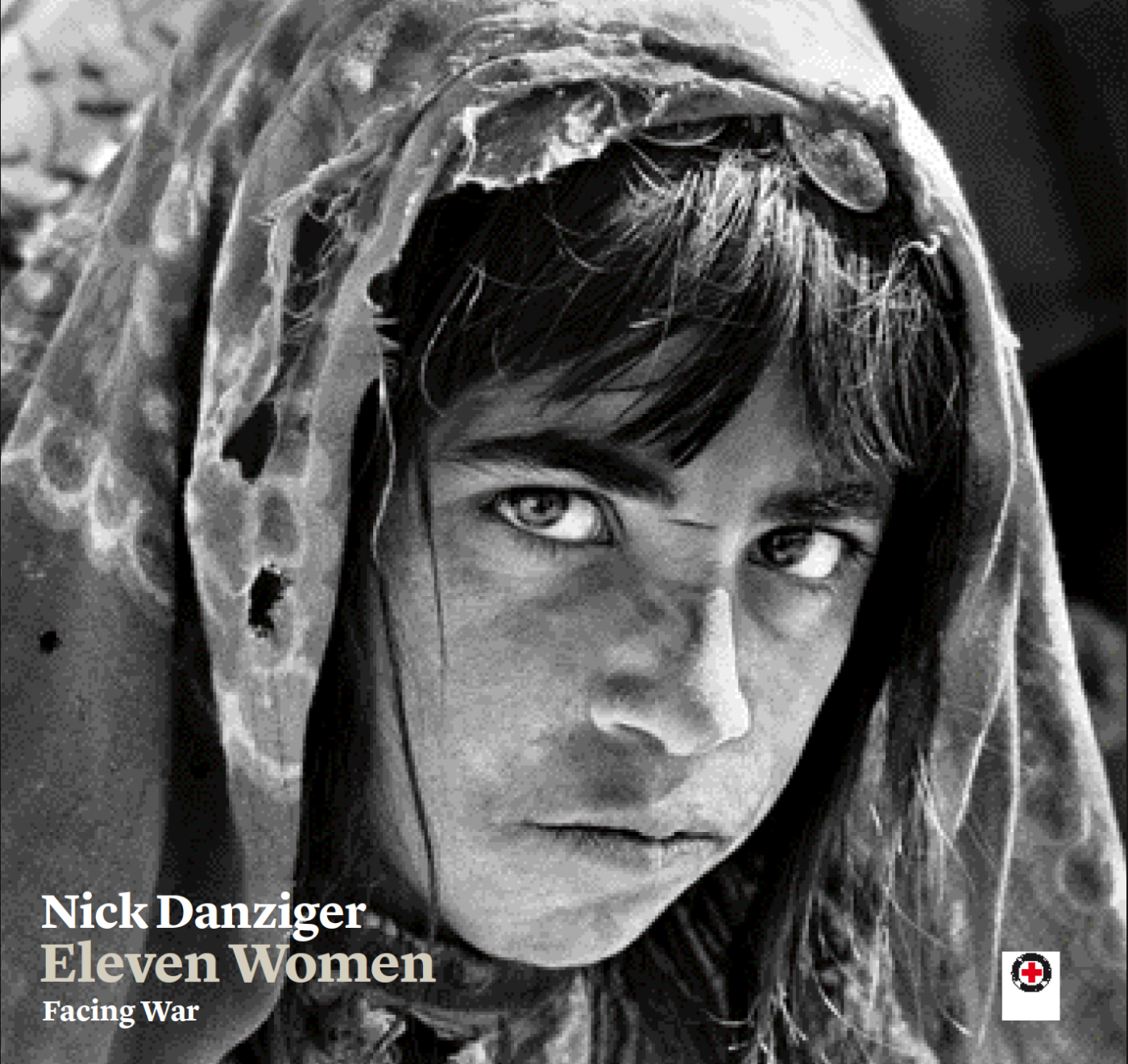
Rheanna-Marie Hall interviews travel writer, photographer, and film maker Nick Danziger, to talk about his decade-long project and new book Another Life.
“I have just one more question…” I say, for what must be the twentieth time. I’m talking to Nick Danziger – photographer, travel writer, film maker – and each time I begin to bring the interview to a close, I inevitably start it up again with another question. The more he says, the more I want to know.

Nick Danziger is a world-renowned photojournalist, with numerous awards to his name and whose work has been exhibited across the globe. I’ve called Nick to talk about his newest project, a project which incidentally is also the product of twelve year’s work. So, not that new at all then?
In 2000, the United Nations created the Millennium Declaration, an agenda formed of eight development goals including the eradication of extreme poverty and hunger, a reduction in child mortality, the promotion of gender equality and empowerment of women, and combatting HIV/AIDS, Malaria, and other diseases. In 2005 Nick was commissioned by World Vision to investigate the impact of the Millennium Development Goals. He travelled to eight of the world’s poorest countries to document what life was like for the women and children living there. Five years later, and again five years after that, he returned and after spending “over a decade photographing the same people,” the concept of Another Life was born.
Nick describes the book, a collection of all the photographs he took on his visits, with accompanying text by esteemed travel writer Rory MacLean, as a “project that goes very much beyond statistics”.
“This will be a photographic book of everyone’s stories,” he tells me. “Many of the issues are related to families, women and children.” The girl on the cover, Aissha, is one of those children, and one who Nick has thus far successfully been able to retrace. “I’ve been following her since she was a baby, [in the book] you’ll see her growing up.”
Nick’s desire to follow their lives is not an easy one. Finding people again after five years will always have its difficulties. In countries where villages can lie hundreds of miles away from the nearest city and some don’t exist on maps, it becomes a mammoth task.
Nick uses Aissha as an example of how challenging it can be to retrace individuals. “Aissha is very difficult to find, she’s a nomad. She spends her time with the family livestock,” he explains. “She’s nowhere near the capital.”
Nick’s original commission was in 2005, but his desire to return and retrace the people he met means that, despite the difficulties, ‘everyone has been revisited a minimum of three times’, and some ‘up to five times’ depending on the circumstances. If he is in already in a country for an exhibition, for example, Nick tells me he’ll use the opportunity to see the people living there again.
Without the support and research of others though, Nick doubts he would have been able to continue with the project at all. “Some of these people are really hard to get to.”
“This works thanks to enormous teamwork,” he assures me. “I could not have done this without the help of numerous people.”
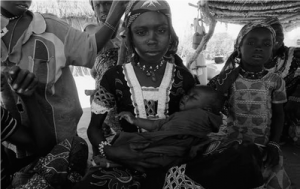
12 year old Aissha, a Fula shepherdess in Niger (2015). Photograph: Nick Danziger
In retracing the lives of people that, originally, were part of a commission for a one-off project, Another Life is a unique concept that goes beyond a brief. Photography is so often a single glimpse into an individual’s life, caught – whether accidentally or intentionally – through the lens. It is this aspect of Another Life that Nick feels particularly strongly about.
“I think it’s really important to have a follow-up,” he tells me. “Personally I think it’s really unusual. You never know what happens afterwards, and a lot of my work is going back.” He explains that returning has been crucial, not only because of “greater perspective” on their lives, but also the “trust that builds up” between Nick and those he photographs. “It’s more than just a project, it’s a life’s work,” he finishes.
I ask if amongst all the people he has met and all the lives he has documented, whether there are any that particularly stand out. There’s a silence while he thinks. “The things that tend to stick are ones about young people because they still have their lives ahead of them, particularly young girls who face numerous barriers and obstacles they wouldn’t face elsewhere.”
The book itself is currently awaiting a release date. It is being hosted on Unbound, a crowdfunding site created specifically for publishing. Crowdfunding, for anyone not in the know, works by way of donations from members of the public. An amount of money is pledged towards the publishing of the book in return for rewards, which range anywhere from a signed copy to dinner with Nick and Rory. Only if the target amount is reached will money be taken, so return on investment is guaranteed.
As he is already a published author with a well-known name and a reputation built over three decades of experience, I’m curious as to why Nick has chosen crowdfunding as a means of publishing. I’m surprised by his answer: even for a seasoned professional, it seems, “it’s really difficult to raise the funding for these types of projects”.
With the current crises across the world, including that of the struggle in Syria from which extraordinary civilian journalism has emerged on social media, I had assumed that humanitarian journalism was on the rise, that the demand was an ever-growing thing. Not so. In fact, the exact opposite.
“It’s definitely getting harder.” He pauses. “Websites want this but websites have insatiable appetites.” He points out that its “celebrity” everyone wants photos of nowadays; just look at magazines. And he’s right. I write this with a glossy magazine in my bag at this moment, adorned with a famous face. And inside is much the same. Beautiful faces. Lives ever on the up. Save for one article dedicated every issue to ‘problems’ it’s designed for escapism. Which I unashamedly admit to wanting. But now it’s pointed out to me, the gap for humanitarian journalism is glaring. And even when it is featured, Nick tells me it’s a battle for good coverage: “It’s harder to get published in traditional outlets, and even then, not in the forefront.”
Nick admits that he is at an advantage compared to new photojournalists looking for this kind of career. “It’s possible to place this work if you have a name,” he explains. “I’ve been very fortunate. I’m likely to get published. But then again, I think it’s unfair, if you have a name… People know who you are. It’s harder if you’re an unknown.” It is no longer enough to have good material. The name that comes with it, in this case Nick Danziger, provides reassurance to publishers that it will sell and readers that it is reputable.
“I have just one more question…” I begin, and I mean it this time. Why, I ask, after all he has told me about the demands and desires of the industry and the mainstream media, has he chosen to pursue humanitarian journalism so determinedly for so many years.
“We’re not hearing these types of stories,” he tells me. “Our world is so unbalanced.”
“It’s important we do have an understanding […] They are remarkable people, heroic. Everyday life is a challenge for them.”
Nick pauses a moment before he continues.
“They’re always in my head. It’s one of the reasons I return; I know they’re still out there.”
Another Life: one commission turned into a life’s work.
Further Reading
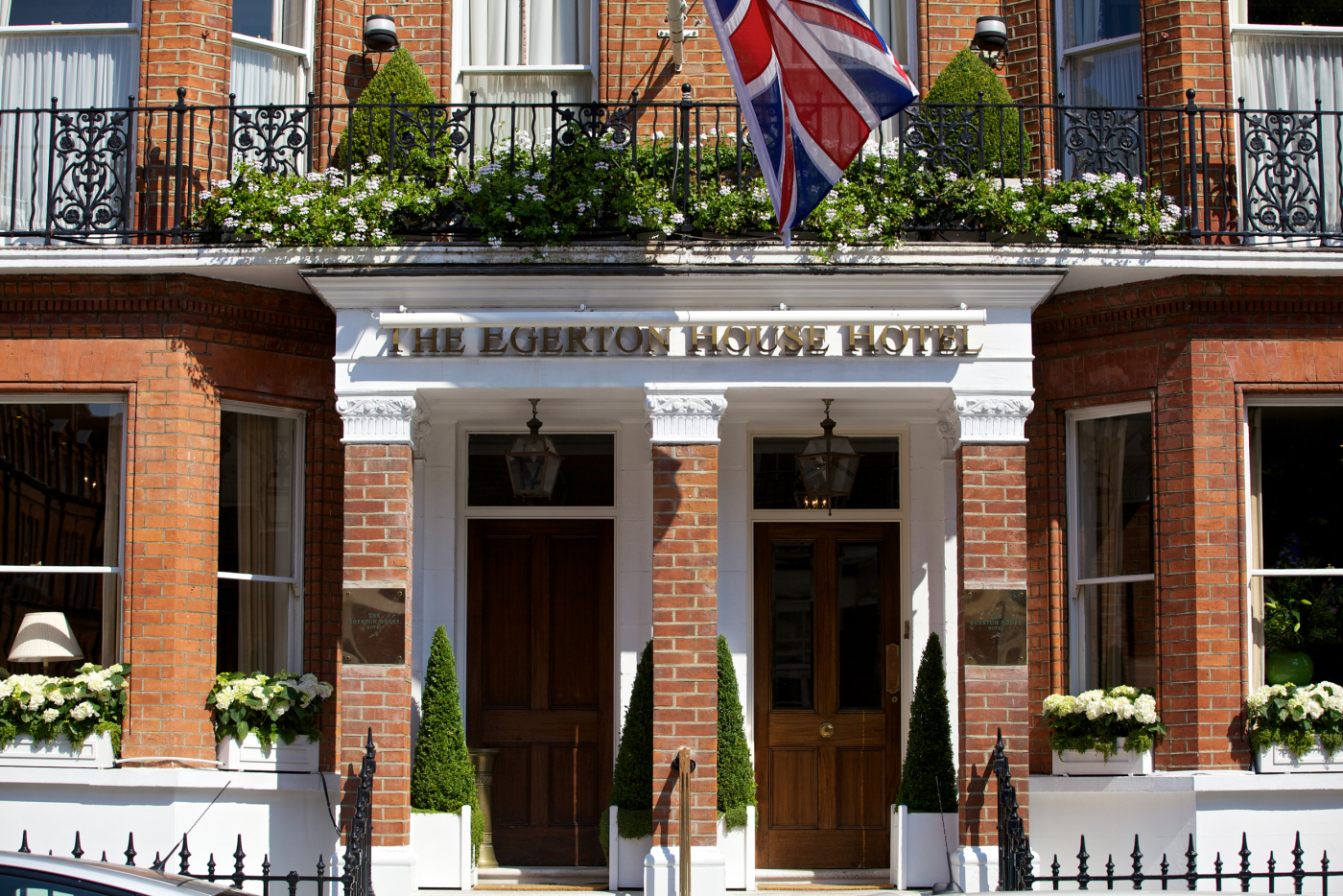
Hotel: Egerton House Hotel
Location: Situated equidistant between Knightsbridge and South Kensington on a quiet residential street of commanding Victorian properties. The hotel is just a few minutes’ walk from Harrods, The Victoria and Albert and the Natural History Museum.
Highlights: If you are looking for so much more than just a bed for the night, perhaps your London ‘home from home’, the Egerton House Hotel, is ideally suited to the female business traveller. Under the expert management of Michelle Devlin, the Egerton House Hotel forms part of the family-owned Red Carnation Group, noted for its quality, service and beautifully appointed, homely properties.
Popular with discerning leisure and business travellers alike, Egerton House provides a discreet yet friendly environment in which to work, entertain your guests or take a delicious seasonal afternoon tea.
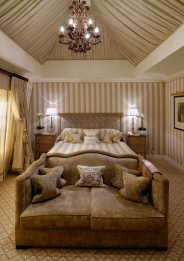
Each of the rooms have been individually designed by founder Beatrice Tollman so to make the most of your stay, make sure you have enough time to enjoy the comfort of your room. We’ve all stayed in a hotel that doesn’t match up to what we are used to at home but those extra little touches like a Nespresso machine, Jing Teas, handmade biscuits, a fruit platter, fresh flowers, complimentary water, a stack of glossy magazines, divinely soft linen, and a generous supply of Penhaligon’s toiletries are thoughtfully provided to make you want for nothing.
The piece de résistance for me however is the discrete and charming Martini Bar, popular with the locals and guests alike. The hotel comes alive in the evening as many come to sample an exciting array of gin and vodka based Martinis. Be warned! The portions are as generous as they are delicious so whilst working your way through the menu could be quite dangerous, at least you won’t have a long way to stumble to your cosy bedroom and one of the best turndown services in London.
Dinner is a somewhat semi-casual affair taken in the lounge and bar, and there’s an extensive menu. Guests can enjoy a range of dishes, including a classic Sirloin Steak, Wagyu Burger or, as a lighter option perhaps, Bea’s own recipe chicken soup. If none of these options tickle your fancy, then do as I did, and build your own custom salad from a long list of ingredients. The service is warm and friendly and you are invited to linger and enjoy the surroundings and the team genuinely love to get to know their guests.
Why Go: Free WiFi, the best Martinis in Knightsbridge and location, location, location!
Need to know: Food is served in the hotel lounge and bar. There is no separate restaurant.

Maiden-voyage.com offer: Quote Promotion Code ‘MaidenVoyage’ to enjoy a room upgrade (subject to availability), welcome drink and breakfast and complimentary wifi, early check in and late check out (subject to availability). Click here to book.
Insider Info: Do check-in early and don’t make plans to go out in the evening; a stay at the Egerton House Hotel is worth taking the time to enjoy.
Further Reading

Globalisation may have brought the world closer but with stark differences in culture, language, climate and time zones, it’s not exactly business as usual if you’re new to Asia and are heading there for work. Here are the things you should take note of for a hassle-free trip and to fully experience the continent’s charms.
- Mind your language
English may not be the main language in Asia (with the exception of Singapore, which counts English as one of its four official languages) but it is widely used and spoken, and increasingly so. In the main cities and at business or travel hubs – airports, shopping malls and hotels – you won’t have much trouble communicating in English. One thing to remember is that accents vary from country to country, and some terms or phrases may be localised to a different context altogether.
- Punctuality redefined
The Japanese and Koreans are known for their time management, with the Taiwanese and Singaporeans not far behind. In other parts of Asia, precision may not always be a priority; an average ‘grace period’ of 15 minutes is considered reasonable and in some instances (such as official functions) even longer and expected. Bad traffic is one of the most commonly quoted justifications for running late, which, in cities like Bangkok and Jakarta, is more understatement than exaggeration.
- Western wardrobes are on point
Asia is as up-to-date as the rest of the world where fashion, style and dress codes are concerned. In business settings, you won’t be out of place in your power suits and career wear. At the same time, a more relaxed wardrobe is also acceptable. This is especially so in the tropical climes, where a three-piece suit is simply not sensible in the punishing heat.

Local women may also don traditional outfits that are unique to their respective cultures, which can even be considered formal wear given the right cut, material and finishing. In Malaysia, for example, a silk saree, satin qipao and lace Nyonya kebaya are all equally appropriate for corporate functions.
- Warm doesn’t only describe the weather
Hospitality is not just a term bandied about in the tourism industry. Whether in social gatherings or business meetings, you are likely to feel the warmth as Asians are generally keen to build friendships and often go out of their way to ensure that you, as their guest, feel right at home. Clients, colleagues or associates may invite you to events outside of work or even to their homes for meals. There is no obligation for you to accept, although it is considered polite or respectful – also known as ‘giving face’ – to at least show up, even if only for a short while.
- Gift codes
If you do accept the invitation, do bring a gift for the host. A food basket or hamper is never a bad idea, but do consider the recipient’s religious, cultural or dietary sensitivities – no pork or alcohol for Muslims, and Buddhists and Hindus don’t eat beef or may be vegetarians. Fresh fruits, candies and chocolates are pretty safe bets across Asia.
- Men at work
In general, Asian societies are more conservative but many Asians are educated abroad and well-exposed to Western cultures and ideologies. The idea that you should not shake hands with a member of the opposite sex may be advisable in the more traditional Muslim countries, but does not apply to every culture in the continent. If unsure, when meeting a male associate for the first time, wait for him to make the first move. If he extends his hand to shake yours, by all means reciprocate.
- Consult, don’t confront
Asians generally prefer a non-confrontational approach to discussions and negotiations. In line with the ‘giving face’ culture, maintaining harmony is integral to all relationships, including business liaisons. Hierarchy is another important component; respect is always accorded to the elders, and those who are of higher social status or corporate ranks.
- Fast track through airports
Breeze through immigration when visiting Asia with the APEC Business Travel Card (ABTC), which enables pre-cleared short-term entry to member countries. Card holders don’t need to apply for visas or entry permits and can access special APEC lanes at major airports. Currently, 19 countries are participating in this scheme and although the UK is not among them, British citizens who are permanent residents of member countries may be eligible to apply for this card (terms and conditions apply, and vary among the countries).

Vivian Chong is the Editor of Zafigo.com, a Kuala Lumpur-based website that aims to help women travel safer, better and in more interesting ways. An avid traveller and story seeker, Vivian is always on the hunt for authentic experiences, memorable encounters and inspiring adventures.
Visit the website: www.zafigo.com